
Fibreglass pools vs concrete pools — which suits Australian backyards?
A practical, down-to-earth comparison for homeowners in Australia considering lifespan, cost, maintenance and design flexibility.
Quick snapshot
Choosing between a fibreglass (gelcoat) pool and a concrete pool is one of the most common decisions for Australian homeowners planning a new pool. Both options deliver a beautiful result, but they differ across three big areas — upfront cost and timeline, ongoing maintenance and durability, and the flexibility of design and finishes. This guide will provide a clear, practical comparison to help you choose the right pool for your lifestyle and budget.
What is a fibreglass pool?
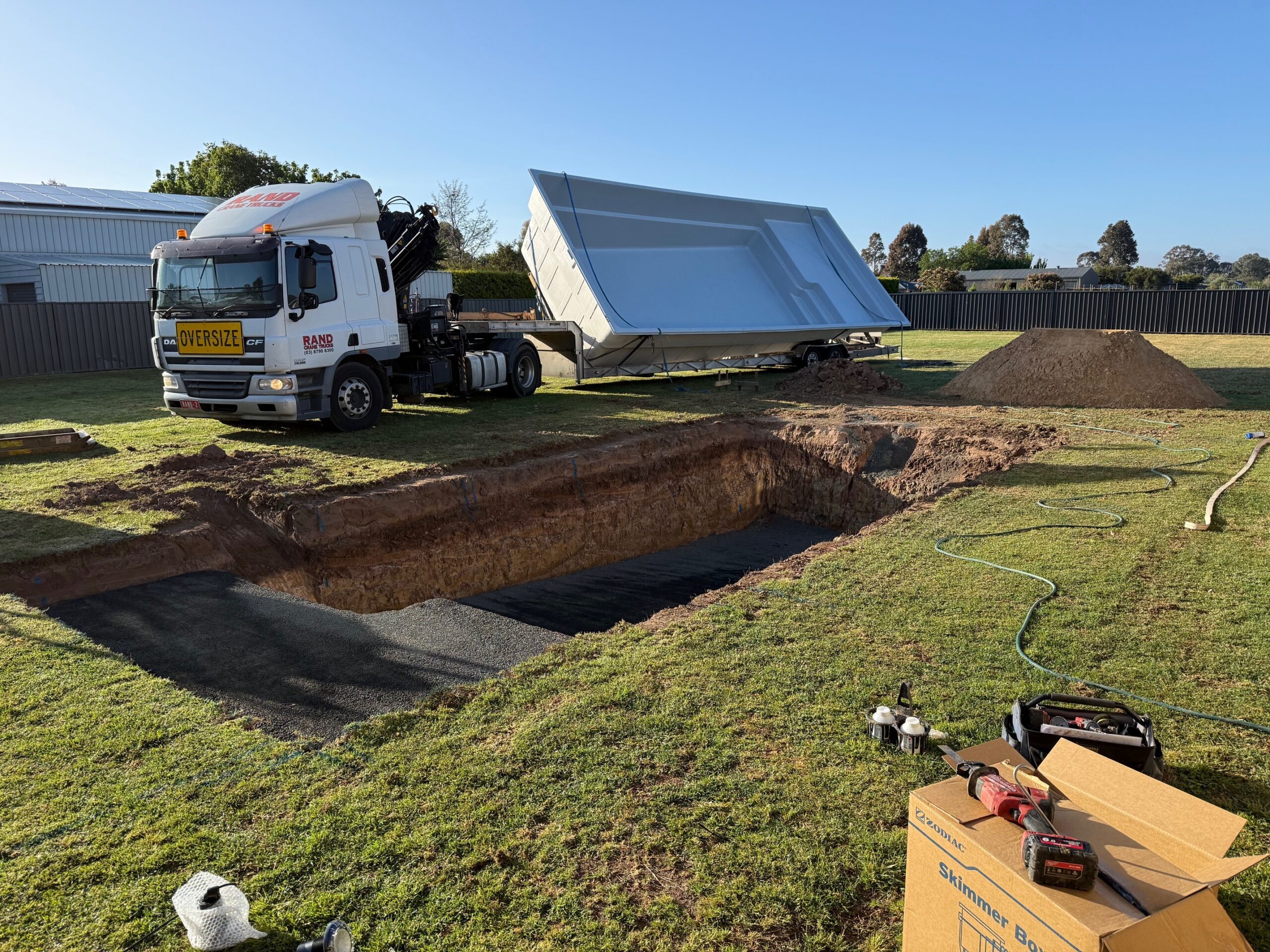
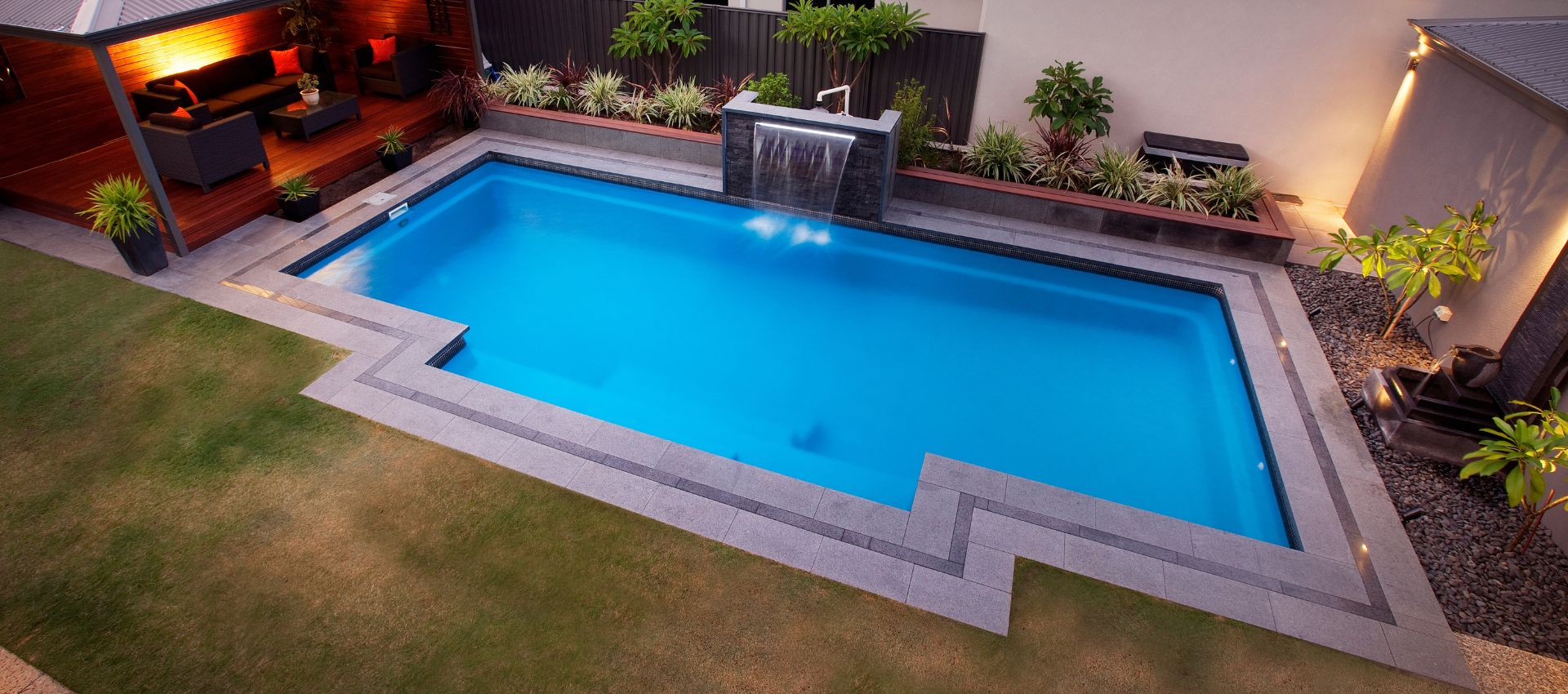
Fibreglass pools are factory-made shells — a one-piece structure manufactured under controlled conditions and delivered to site for installation. They arrive ready with a smooth gelcoat finish, pre-formed steps and seating. Installation is typically faster and less disruptive than concrete. Modern fibreglass ranges in Australia include a variety of shapes, tanning ledges, benches, and integrated steps that blend seamlessly into backyard landscapes.
What is a concrete pool?
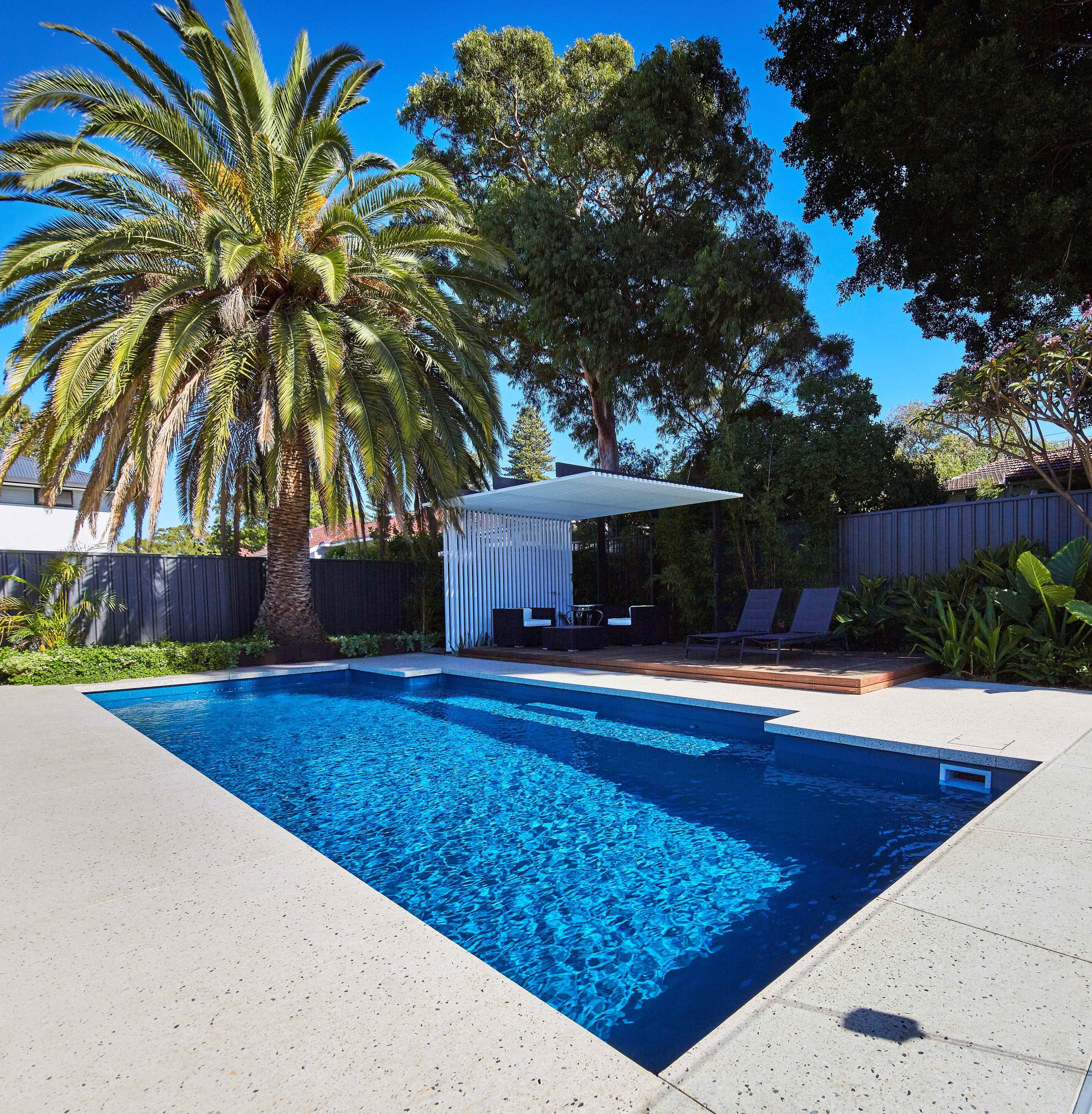
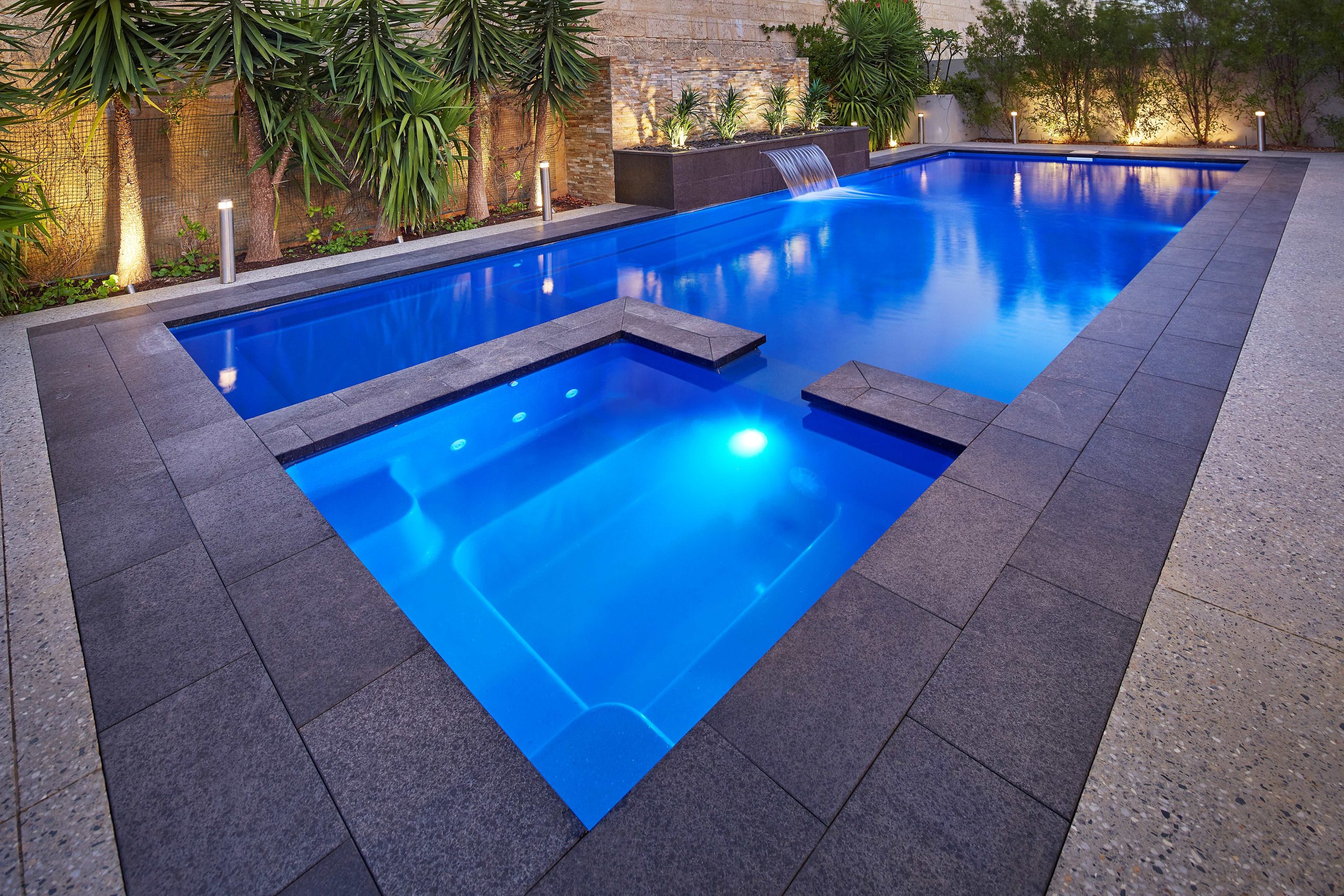
Concrete pools, also referred to as shotcrete or gunite pools, are built on-site by spraying concrete over steel reinforcement. They provide ultimate flexibility in shape, size, and depth, and allow for a variety of finishes including pebblecrete, tiles, or polished render. Concrete pools can incorporate bespoke features such as sunken lounges, spas, and unique water features that are customised to suit the property and lifestyle.
Cost and construction timeline
Fibreglass pools generally have a lower total build-time — often a few days for excavation and plumbing, with a couple of weeks to complete landscaping and commissioning. Concrete pools typically take longer due to on-site construction and curing times, ranging from several weeks to a few months. Upfront price varies depending on size and finish, but high-end concrete finishes and tiling can make the initial cost significantly higher than a standard fibreglass pool.
Maintenance and lifetime costs
Fibreglass pools feature a non-porous gelcoat surface that resists algae growth and reduces the need for intensive chemical use. Routine maintenance is generally easier, and acid washing is required far less often. In contrast, concrete pools are porous and can require more frequent chemical adjustments, acid washing, and periodic resurfacing every 10–15 years to maintain a pristine appearance.
Durability and repairs
Both pool types are highly durable when installed correctly. Fibreglass pools are strong and come with structural warranties from reputable manufacturers. Minor scratches or gelcoat crazing can occur but are repairable by professionals. Concrete pools are robust and allow on-site repairs for cracks or surface wear. The longevity of a concrete pool is excellent, especially when properly maintained.
Design flexibility and aesthetics
Concrete pools provide complete freedom in customisation, with no limits on shape, depth, or integrated features. This is ideal for unique or complex backyard designs. Fibreglass pools have improved significantly in available shapes and finishes; modern designs include built-in tanning ledges, steps, and seating. They offer a beautiful, predictable finish with less onsite construction variability.
Environmental and running considerations
Fibreglass pools can be more environmentally friendly due to lower chemical use and faster heating times, since they generally have smaller water volumes than large concrete pools. Concrete pools require more chemical balancing and can consume more energy to heat depending on their size. Efficient pumps and proper design will help reduce running costs for either pool type.
When to choose fibreglass
- Shorter installation time and less site disruption.
- Lower routine chemical and cleaning effort.
- Proven designs with manufacturer warranties.
- Cost-effective for standard pool shapes and sizes.
When to choose concrete
- Full custom shape or landscaping integration required.
- High-end tiling or unique surface finishes desired.
- Flexible installation of bespoke features such as spas or water features.
- Prepared for longer construction timelines and periodic resurfacing.
Practical tips for Australian homeowners
Check local council regulations and soil conditions before installation. Ensure access for delivery of fibreglass shells or construction equipment for concrete pools. Compare multiple quotes covering excavation, plumbing, fencing, landscaping, and ongoing service. Confirm warranties, installer experience, and view previous projects in your area. Proper planning ensures a pool that suits both lifestyle and budget.